
Cattle gastrointestinal strongyles
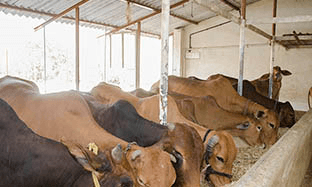
Gastrointestinal strongyles are a group of parasitic roundworms that infect the digestive system of cattle, primarily affecting the abomasum and intestines. These internal parasites in cattle are a constant challenge in grazing systems, as animals become infected while feeding on contaminated pasture. Their presence leads to significant economic losses through reduced weight gain, poor feed conversion, and lower milk production. Effective parasite control in cattle therefore relies on a strategic approach that balances treatment with the development of natural immunity.
Digestive Strongyles
Digestive strongyles include species such as Ostertagia (most pathogenic), Haemonchus, Cooperia, Nematodirus, and Oesophagostomum. These internal parasites in cattle have a lifecycle closely linked to pasture:
- Adult worms in the animal lay eggs that pass out in faeces.
- Eggs hatch into larvae on pasture under suitable conditions.
- Infective larvae are ingested during grazing.
- Larvae penetrate the stomach or intestinal lining, mature, and repeat the cycle.
During this process, larvae damage the mucosa of the abomasum, disrupting digestion and nutrient absorption. This leads to diarrhoea, weight loss, and reduced productivity, making timely parasite control in cattle essential.
Impact on Cattle Health
The effects of internal parasites in cattle go beyond visible illness and directly affect productivity:
- Weight loss due to poor nutrient absorption
- Reduced feed efficiency, increasing feeding costs
- Anemia (especially with blood-feeding species like Haemonchus)
- Lower milk yield in lactating animals
- Delayed growth in young stock
Even moderate infestations can lead to hidden losses, emphasizing the importance of consistent parasite control in cattle.
Building Immunity in Cattle
How Immunity Develops
Repeated exposure to internal parasites in cattle gradually stimulates the immune system. Over time, cattle develop partial immunity that limits parasite reproduction rather than completely eliminating infection.
Why Young Calves Are More Vulnerable
Young, naïve cattle lack prior exposure, making them highly susceptible. Up to 70% of ingested larvae may establish infection, compared to only about 1% in adults with developed immunity.
Role of Nutrition
Proper nutrition—especially adequate protein, minerals, and vitamins—supports immune function. Poor nutrition weakens resistance, increasing reliance on chemical parasite control in cattle.
Why Immunity Is Not Complete
Immunity reduces parasite burden but does not fully eliminate worms. Adult cattle can still carry and shed parasites, contributing to pasture contamination.
Age & Grazing-Based Management
Young Calves
Highly vulnerable and major contributors to pasture contamination. Early grazing exposure should be controlled to balance immunity development and disease prevention. Strategic parasite control in cattle is critical at this stage.
Growing Cattle
During the first two grazing seasons, animals gradually build immunity. Monitoring and timely intervention help prevent production losses due to internal parasites in cattle.
Adult Cattle
Generally more resistant due to acquired immunity. Management is often based on clinical signs, productivity levels, and diagnostic indicators rather than routine treatment.
Risk Categorization: Mild vs Severe Parasitism
Mild Parasitism
- Slight weight loss
- Mild diarrhoea
- Subtle drop in productivity
- Often subclinical but economically significant
Severe Parasitism
- Marked weight loss and poor body condition
- Persistent diarrhoea
- Anemia and weakness
- Noticeable decline in milk yield or growth
Severe Parasitism Management
In cases of heavy infestation, immediate action is required:
- Targeted deworming under veterinary guidance
- Supportive nutrition to restore body condition
- Temporary removal from contaminated pasture
- Monitoring for recovery and reinfection
Effective management of severe cases is a key part of parasite control in cattle, preventing long-term productivity losses.
Strategic Approach to Parasite Control
Sustainable parasite control in cattle combines:
- Controlled exposure to build immunity
- Timely and selective deworming
- Pasture management to reduce larval load
- Regular monitoring of herd health
Balancing these elements ensures reduced dependence on treatments while maintaining productivity and controlling internal parasites in cattle effectively.